ServicesRain Chains
Rain Chains in North Charleston
We install copper, aluminum and steel rain chains that carry water from your gutter outlet to the ground in a visible, quiet stream. Each one is sized to the roof area it drains, hung from a real bracket and anchored at the bottom so it stays put in summer wind.
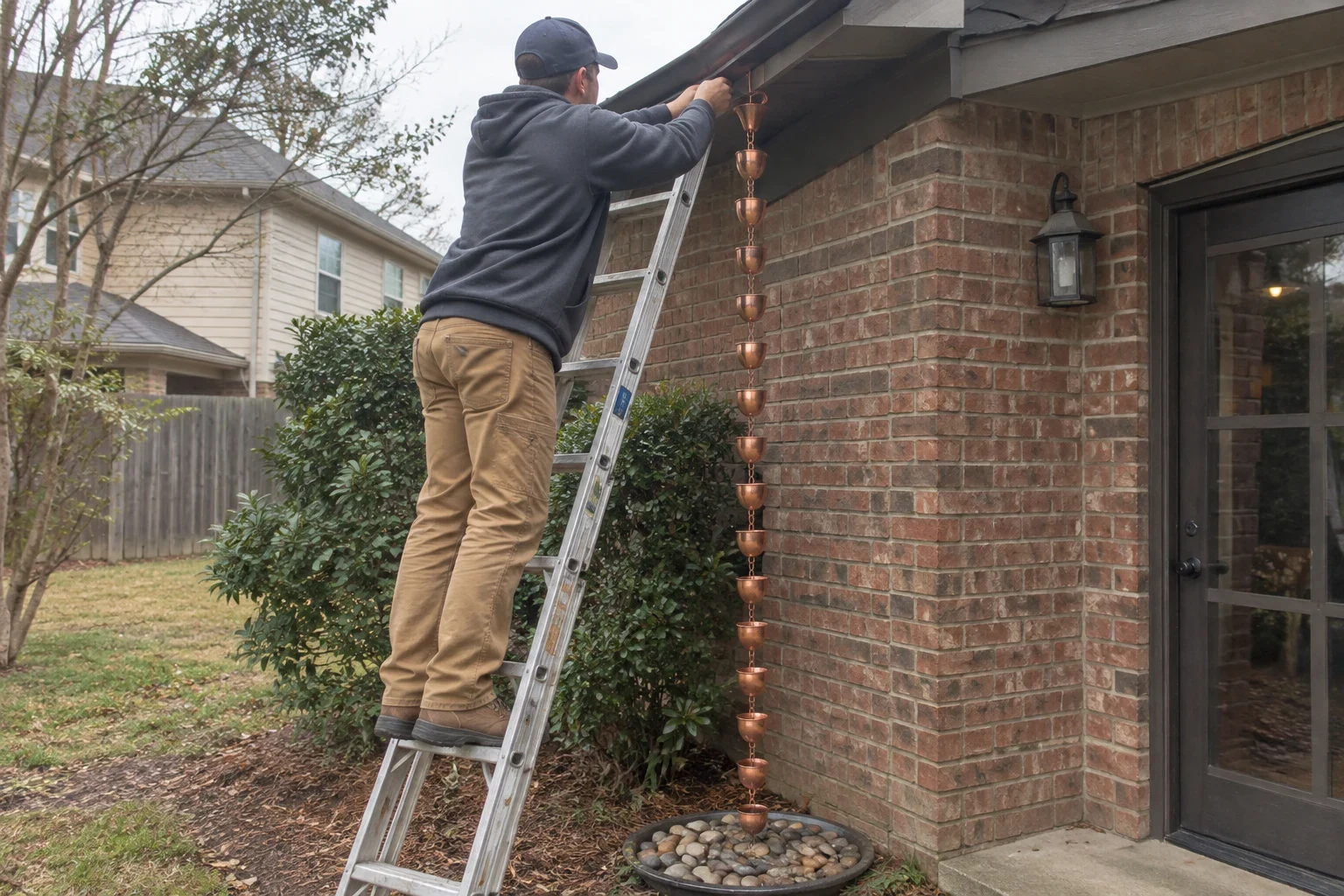
How Rain Chains Carry Water and Where They Belong
Instead of routing roof water through a closed pipe, a chain hung from the gutter outlet lets surface tension pull the flow down from cup to cup or link to link, where you can see it. Chains suit an entry, a porch corner or a short stretch of roof where the sound and look of moving water is part of the appeal, and where the soil underneath can absorb a steady stream.
Some spots are a poor match. Because a chain carries less volume than an enclosed pipe, a long valley or a large roof plane can push more water at it than it can hold in a hard storm, and the overflow splashes back onto the siding. Before we suggest one, we work out how much roof drains to that outlet, first on the phone and again at the estimate, and we say so directly if a chain would be overloaded there.
You also get a realistic install date and a fixed arrival window. If a back-ordered part or a weather delay moves the job, you hear from us ahead of time, not on the morning of.
What Our Rain Chain Installation Includes
Drainage check at the outlet
We measure the roof area that drains to the outlet and check the gutter's pitch toward it. If the outlet hole is too small or sits in the wrong spot, we tell you before anything is hung.
Cup or link style, matched to flow
Cup chains catch and pass water in stages and handle heavier flow with less splash. Link chains look lighter but shed more water sideways, so we use them on small roof sections.
Material choice
Solid copper weathers from bright to brown and then toward a green patina. Powder-coated aluminum keeps its color and weighs less, and galvanized steel is the budget option that will eventually show rust at the joints.
Hanging bracket or outlet kit
The chain hangs from a gutter bracket that spans the outlet, or from a funnel-style adapter that steers water onto the first cup. Hanging a chain straight off the gutter lip bends the edge over time, so we do not do it.
Ground anchor and landing
We stake or weight the bottom so the chain stays plumb, then set a basin or a gravel bed sloped away from the foundation. Water that pools against the slab is the most common rain chain complaint, and this step prevents it.
Signs a Rain Chain Is a Good Fit for Your Home
A front entry outlet you look at every day
An enclosed pipe beside the front door is purely functional. A chain does the same job at that spot and gives the corner some character.
A small roof section with modest flow
Porch roofs, bay windows and short gutter runs send a manageable amount of water to one outlet. That is where a chain carries the load without overflowing.
A dented or loose pipe at a low-traffic corner
If the existing drain at that corner is crushed or pulling off the wall, replacing it with a chain can be simpler than matching the old pipe. We check the gutter above first, since a sagging section needs gutter repair before anything hangs from it.
A garden bed or rain barrel below
A chain can drop water straight into a barrel lid or a planted basin. That turns roof runoff into something useful instead of a puddle.
How the Job Day Runs
- 1
Estimate and scheduling call
You call, we talk through the location and style, and we set a time to look at the outlet in person. After the visit you get a written estimate and a realistic install date.
- 2
Arrival window and a heads-up
We give you a morning or afternoon window and call when the crew is on the way. Thunderstorms roll in fast here in summer, and if one shuts down ladder work we call you and reset the time rather than leaving you waiting.
- 3
Outlet prep and hanging
We remove any old pipe and straps at that corner, clear and seal the outlet, and fit the bracket or adapter. Then we hang the chain and check that it drops plumb from the outlet to the ground.
- 4
Anchor, landing and water test
We set the ground stake, build the basin or gravel bed, and run a hose in the gutter to watch the flow. If water jumps off the chain, we adjust before we leave.
- 5
Cleanup
Old fasteners, pipe sections and packaging leave with us. Most single-chain installs are finished within a few hours.
What Moves the Price of a Rain Chain
The chain itself is only part of the cost. Height, the condition of the gutter and what happens at the ground all change the labor. Your written estimate lists each piece so you can see what you are paying for.
- Material and style
- Copper cup chains cost the most, and aluminum link chains the least. Heavier cups also take more time to hang and anchor.
- Length and story height
- A second-story eave needs a longer chain and more ladder setup than a single-story porch.
- Outlet work
- Enlarging, relocating or resealing the outlet adds labor. If the gutter itself is undersized or failing, we may point you to gutter installation for that run instead.
- Landing at grade
- A simple stake over existing gravel is quick. A dug basin, a decorative bowl or a rain barrel connection adds materials and time.
Rain Chain Questions We Hear Often
Something not covered here? (843) 612-5300
Will a rain chain handle a heavy summer storm?
A cup chain on a modest roof section handles most storms well. During a true downpour some water will splash off, which is why we size the chain to the roof area and set a wide landing. On large roof planes we will recommend keeping an enclosed pipe there.
Do rain chains blow around in the wind?
An unanchored chain swings and can tap the siding. We stake or weight the bottom so it stays plumb. Before a named storm, you can unhook it from the anchor and lay it down if you prefer.
Will leaves clog a rain chain?
Leaves tend to collect at the outlet and in the cups. Gutter guards or gutter covers on the run above cut down on that debris a lot, and we can talk through both on the same visit.
How long does copper take to change color?
Bare copper starts darkening within weeks in our humid air and turns a deep brown over the first year or so. The green patina comes later and varies with exposure. If you want the color to stay the same, powder-coated aluminum is the better pick.
How soon can you install one?
It depends on our schedule and whether your style is in stock. We give you a real date after the estimate, not a guess, and we call if anything changes.
Ready to Hang a Rain Chain?
Tell us which corner you have in mind and we will set a time to look at the outlet and the ground below. You get a written estimate and an install date you can plan around.